When Service & Reliability Count
Give us a Call!
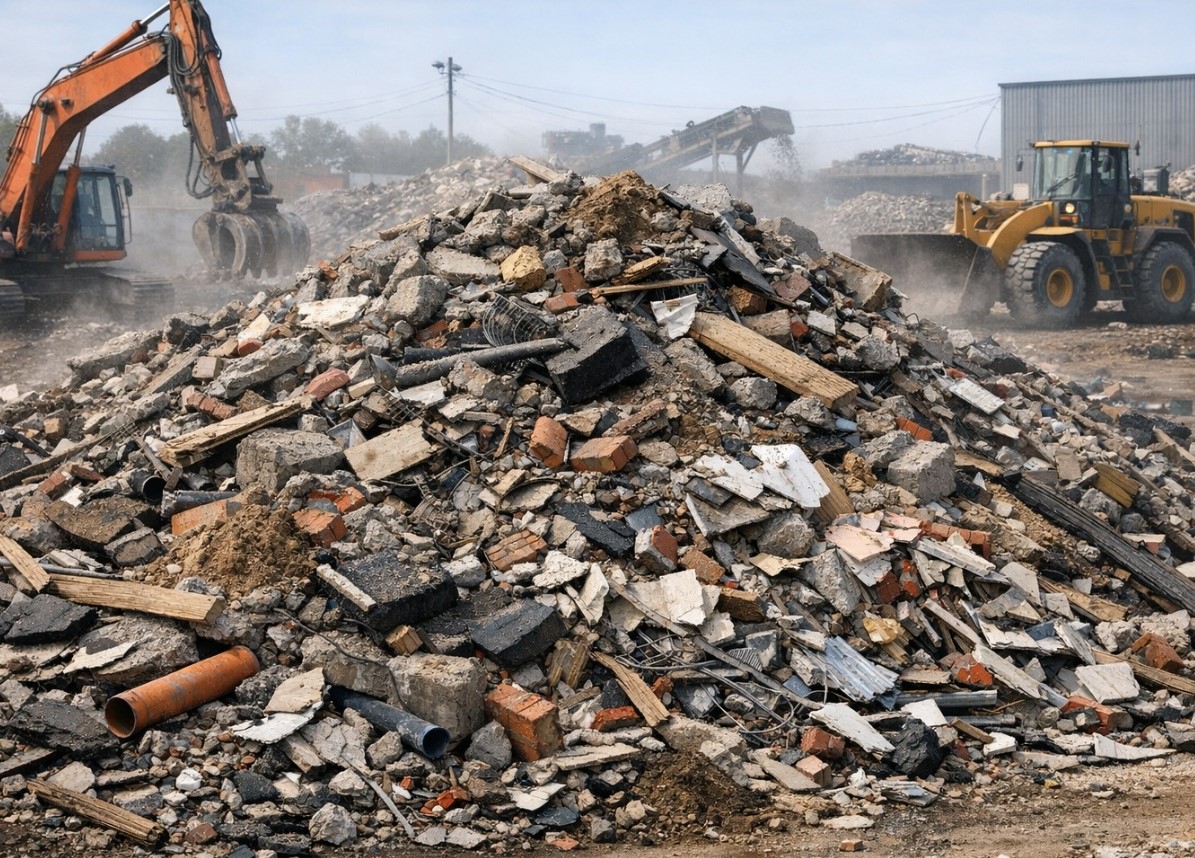
Waste concrete is one of the most common materials generated by construction, demolition, renovation, and civil works. Old footpaths, driveways, slabs, kerbs, foundations, and structural elements all create large volumes of broken concrete when they are removed. If this material is sent directly to landfill, it takes up valuable space and wastes a resource that can be processed and used again. Recycling waste concrete is therefore an important part of modern waste management and sustainable construction. In Australia, construction and demolition waste represents a significant share of the total waste stream, so recovering concrete helps reduce pressure on landfill, conserves raw materials and supports the circular economy. Because concrete is heavy, durable, and largely recyclable, it is well suited to collection, crushing, and reuse in new projects rather than disposal as rubbish.
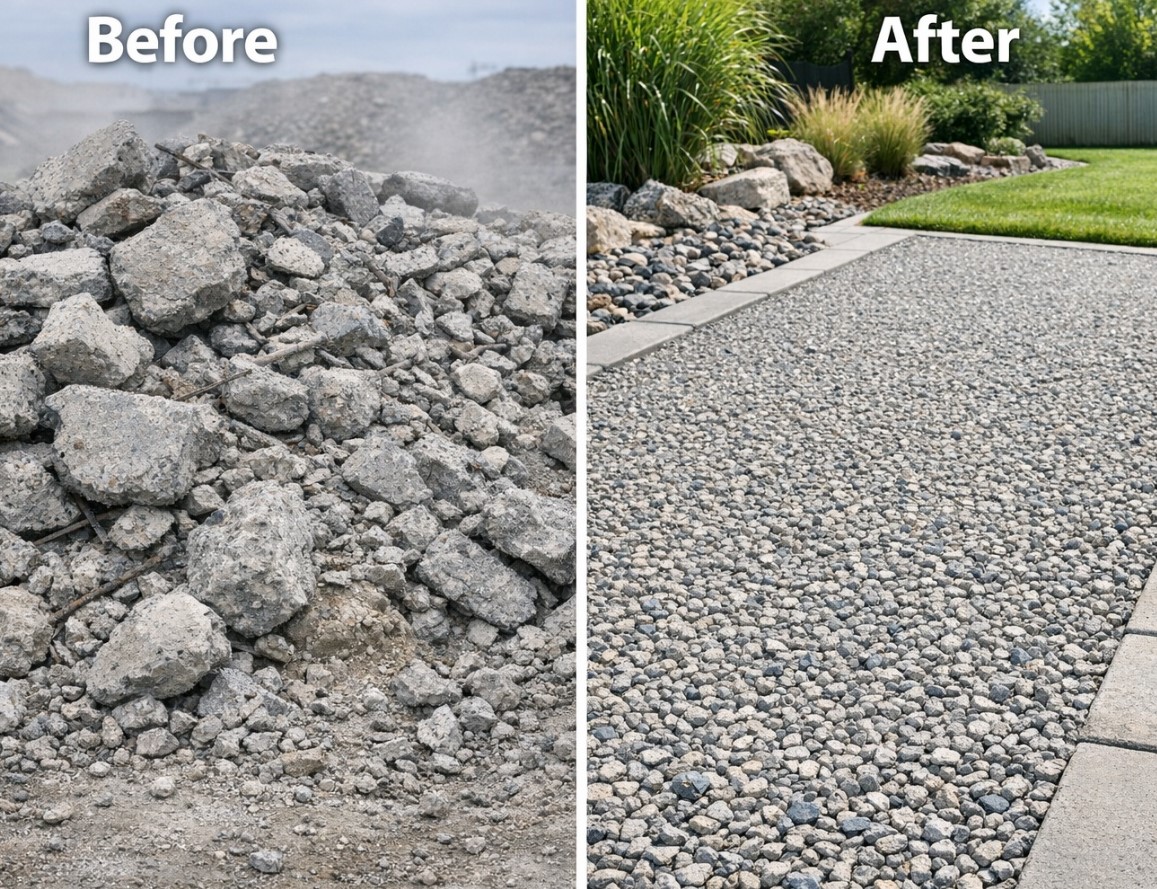
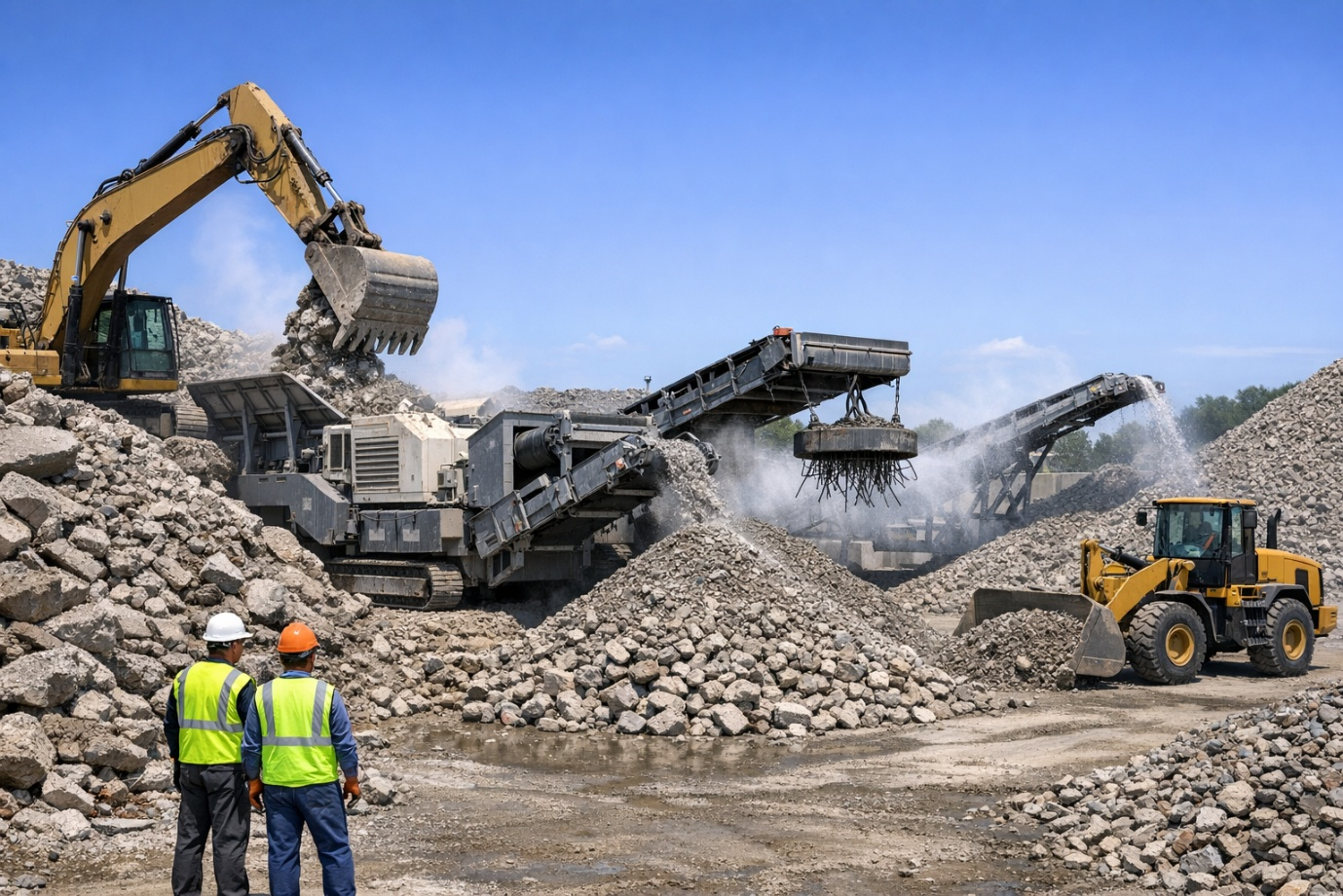
The recycling process for waste concrete usually begins with the separation of concrete from other building materials such as timber, plasterboard, plastic, soil, and general mixed waste. Clean concrete is required because contamination can have serious negative impacts on recovery equipment and affect the quality of the recycled product. After collection, the concrete is transported to a recycling or resource recovery facility where it is broken down into smaller pieces using excavators equiped with pulverisers and finally through a crusher. The crushed material is then screened into different sizes and cleaned to remove reinforcing steel, wire, dirt, and other foreign matter. Magnets are commonly used to extract embedded metal, while additional sorting and inspection help ensure the finished material meets quality requirements. The resulting recycled concrete aggregate can be used for road base, drainage layers, fill, pavements, pipe bedding and other civil or construction purposes. In some cases, recycled material is also blended into new concrete products, reducing the demand for virgin quarry materials.
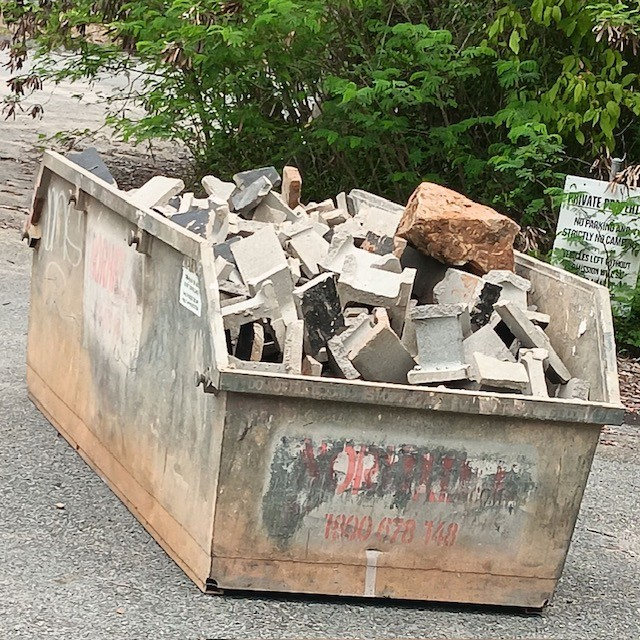
Skip bins play a vital role in the effective recycling of waste concrete because they provide a practical, safe, and organised way to store and transport heavy materials from the worksite to the recycling facility. While concrete can and is placed in ordinary general duty skip bins by manual loading without damaging the skip bin the increasing use of mechanised loading means that specialised heavy duty skip bins are increasingly being used. Dedicated heavy duty skip bins for concrete or heavy waste are designed to manage rubble, bricks, pavers, and broken slabs without creating unnecessary handling risks. By placing skip bins close to the demolition or construction area, workers can immediately separate clean concrete from mixed waste. This source separation is important because it improves recycling outcomes, lowers contamination, and often reduces disposal costs. Many waste companies offer different bin sizes for concrete, allowing builders, contractors, and homeowners to select an option suitable for a small renovation, a driveway removal, or a large demolition project. When the bin is full, it is collected and taken to a facility where the contents can be processed for reuse.
Using skip bins correctly is essential for maximising the value of recycled concrete. The best practice is to keep concrete loads as clean as possible by excluding materials such as timber, plastic, green waste, insulation, food waste, and hazardous substances. On many sites, separate bins are used for different materials so concrete can be recovered more efficiently. Overfilling should also be avoided because concrete is extremely heavy and overloaded bins may be unsafe to lift or transport. Large pieces may need to be broken down before loading so they fit safely within the bin and can be processed more easily later. Skip bins should never be moved from their delivered position, moving the bin may make it difficult or even impossible for the pick-up truck to access the bin. So proper bin placement is a crucial factor, it should allow easy access for workers while also enabling the safe pickup by the collection vehicle. When managed well, skip bins improve housekeeping on site, reduce trip hazards, save labour time, and help projects remain compliant with local waste handling requirements.
Overall, the recycling of waste concrete combined with the use of skip bins offers both environmental and practical benefits. It diverts a heavy waste stream away from landfill, reduces the extraction of new stone and aggregate, lowers transport and disposal inefficiencies, and supports more sustainable construction practices. At the same time, skip bins make the collection process more orderly, safer, and more efficient by ensuring that concrete is contained, separated, and delivered to the right recovery destination. For builders, demolition contractors, councils and property owners, this approach turns what was once seen as waste into a reusable construction resource. As recycling systems continue to improve, the responsible use of skip bins and concrete recovery facilities will become an increasingly important part of reducing waste and building a more resource-efficient industry.