When Service & Reliability Count
Give us a Call!
Norhire Commercial Skip Bins Cairns & Recycling
The pricing of construction waste bins is a multifaceted aspect of waste management, with methodologies evolving in response to regulatory requirements and operational efficiencies. Historically, three primary methods have been employed: Total Fixed Price, Fixed Price with Cut-off, and Floating Price. Each approach has distinct advantages and limitations, influencing both service providers and customers.
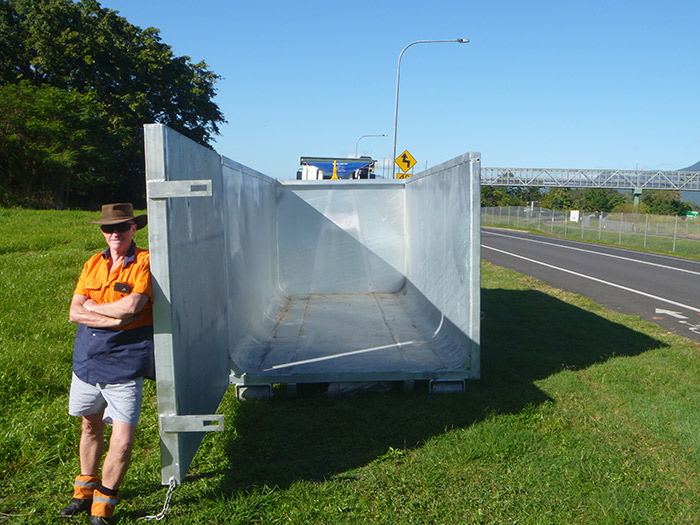
There are three primary methods utilised in the pricing of commercial skip bins in Cairns. These methods have evolved over time, influenced by regulatory changes and operational efficiencies.
This method was predominantly used prior to the implementation of the Waste Levy. It involves setting a predetermined price for the bin service, based on volume, with no regard to weight. With the advent of the Waste Levy, which necessitates the use of weigh-bridges at landfills, this approach has become less practical. While providing absolute certainty to customers regarding price, the bin provider is left with all the risk with regard to bin weight and disposal cost.
In response to the changed regulatory requirements, many service providers adopted a fixed price with a cut-off weight. This model involves charging a fixed fee for waste bins below a specified weight threshold, with additional charges applied for bins exceeding this limit. It requires minimal additional management effort, as record-keeping and invoicing are simplified. Customers benefit from predictable costs, which facilitate budgeting. However, the skip bin provider is relying on an averaging principle within the defined weight range to determine price, and as such is exposed to some risk with regard to disposal cost.
Operational Dynamics
The fixed price with a cut-off approach is based on an estimated average weight. For example, using our data with a cutoff of two tonnes, 26.24% of bins are above this threshold, with an average weight of 2.95 tonnes, while 73.76% are below, averaging 1.04 tonnes. While the overall average weight across all bins is 1.71 tonnes. This approach can lead to unintended consequences, such as customers aiming to maximise their bin load to reach the cutoff, thereby increasing the average weight and eventually the pricing.
The floating price model, regarded as the fairest, charges customers strictly based on the actual weight of waste disposed of in each bin. This method necessitates full access to a weighbridge and a robust management system to ensure accurate weighing and timely invoicing. It aligns costs directly with waste generation, encouraging waste minimisation and efficient waste management practices.
Norhire advocates for the floating price model, which we term “TRUCK PLUS DUMP”.
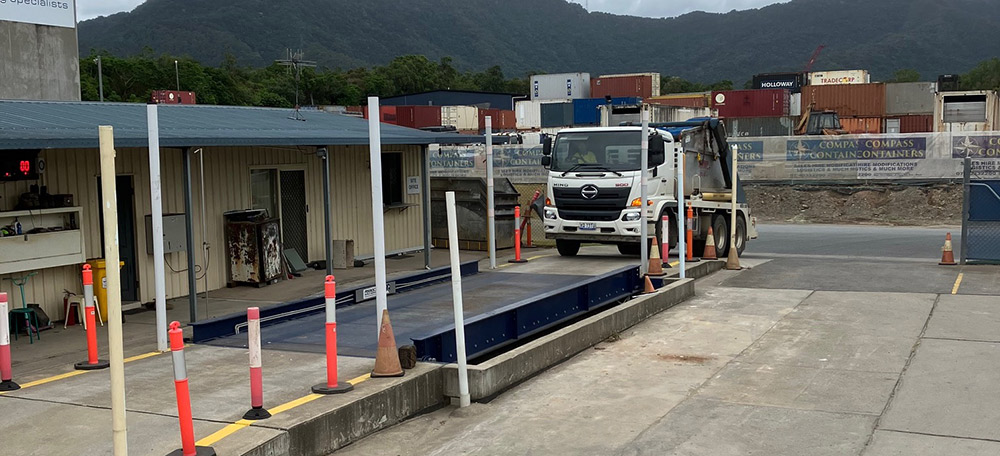
Norhire has invested in a registered and certified weigh-bridge and holds an Environmental Authority (ERA) permit to operate as a transfer and sorting station. This infrastructure enables accurate weighing of each bin upon collection, with weight data and pricing details included on invoices. Such transparency allows clients to monitor waste production, identify trends, and implement strategies to reduce disposal costs.
Disposal pricing is structured on a progressive scale, whereby heavier materials such as soil and concrete incur lower per-tonne disposal costs due to easier sorting and disposal. Conversely, lighter materials like plastics and paper attract higher per-tonne rates. This system incentivises efficient waste management and sorting practices.
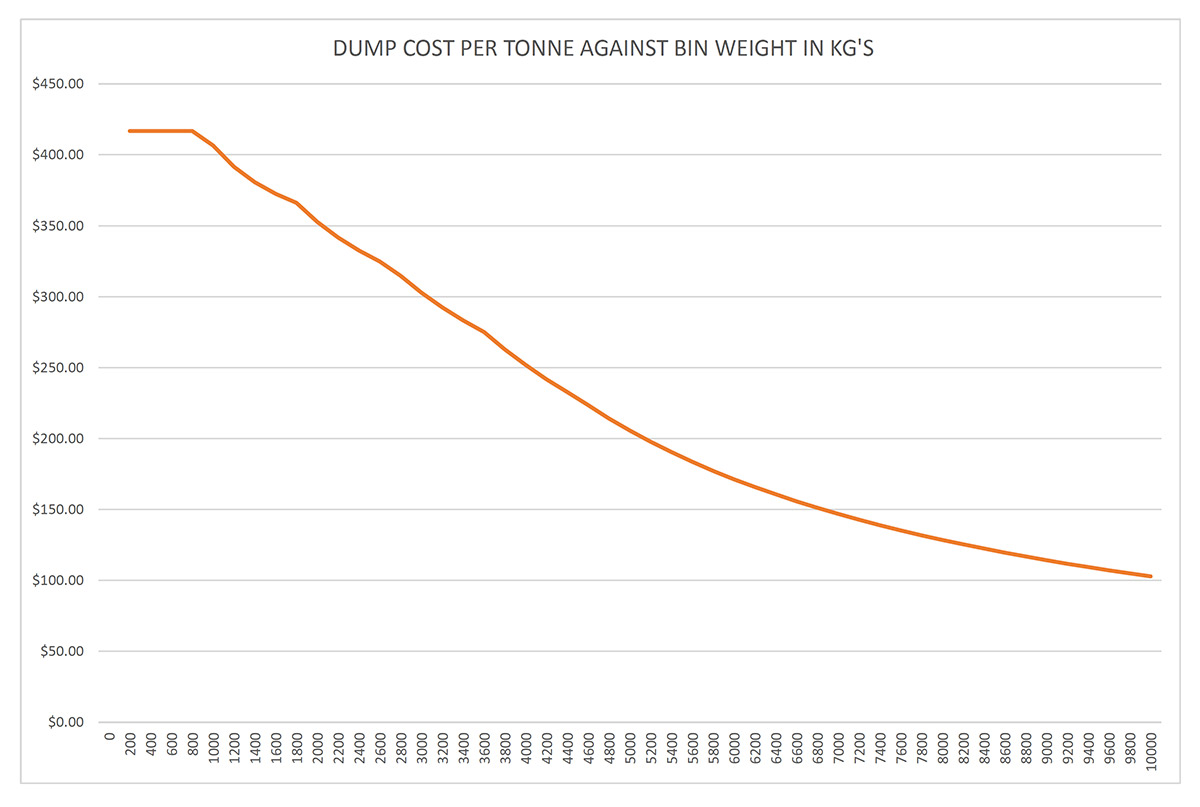
For example: The per tonne charge for a bin containing 1 tonne is about $400, while the per tonne charge for a bin containing 10 tonnes is about $100.
The facility operates as a transfer and sorting station, with the objective of reducing landfill dependency. Material is processed to separate recyclables and residual waste, thereby minimising landfill disposal. Disposal prices are calculated on a progressive scale, where heavier waste types, such as soil and concrete, benefit from lower per-tonne costs, whereas lighter waste, like plastics and paper, incur higher costs.
To substantiate the pricing framework, the company conducted a three-month analysis of all 6m³ bins used for mixed builders’ waste.
The data revealed the following key points:
These findings have demonstrated consistency over extended periods, validating the current pricing models and data-driven approach.
Norhire is committed to providing transparent, fair, and efficient waste management solutions tailored to your needs.
For further details or to receive an indicative price list at various weight levels, please do not hesitate to contact us:
Email: gary@norhire.com.au
Phone: 07 4054 7344